Horse Racing Fair and Archery Festival
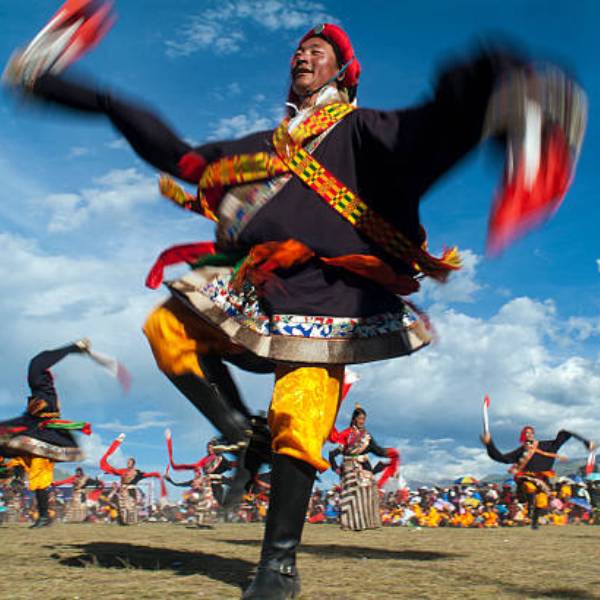
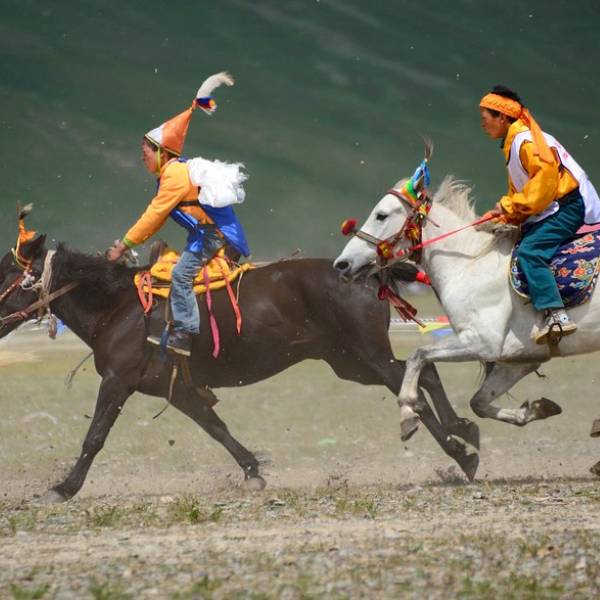
The Horse Racing Fair and Archery Festival in Tibet offers a vivid window into the traditions of communities whose lives have long been connected with horses, open grasslands, and high-altitude pastoral culture. Among the best-known celebrations are the horse-racing festivals associated with Nagqu (Nakchu) and Gyantse, where skilled riders, herding families, musicians, traders, and spectators come together for days of competition and community activity. Riders arrive wearing distinctive Tibetan clothing, while horses are carefully prepared with decorative saddles, ribbons, ornaments, and colourful equipment. The result is much more than a sporting event: it is a gathering where athletic ability, family pride, regional identity, and cultural heritage meet on the Tibetan Plateau.
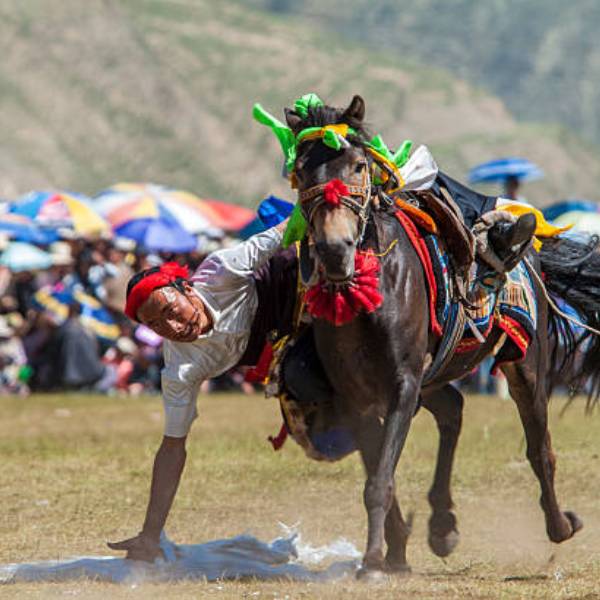
Horses have historically held an important place in life across Tibet’s vast landscapes. Before modern roads and vehicles transformed transportation, horses provided mobility between distant settlements, grazing areas, trading centres, and religious communities. Riding ability therefore developed as both a practical necessity and a respected skill. Festival competitions preserve this connection by giving accomplished horsemen and horsewomen an opportunity to demonstrate speed, balance, control, courage, and precision. Spectators may see fast races alongside specialised riding displays in which participants perform demanding manoeuvres while their horses remain in motion.
Archery brings a different kind of excitement to these gatherings. Competitors must combine concentration, physical control, and accuracy, while mounted archery adds the difficulty of aiming from a moving horse. Watching a rider maintain balance at speed while preparing and releasing an arrow demonstrates the level of training behind traditional equestrian skills. Other events may include wrestling, tug-of-war, strength competitions, yak-related activities, traditional games, or demonstrations of horsemanship, depending on the location and annual programme. These activities make the festival grounds a showcase for several aspects of Tibetan sporting culture rather than horse racing alone.
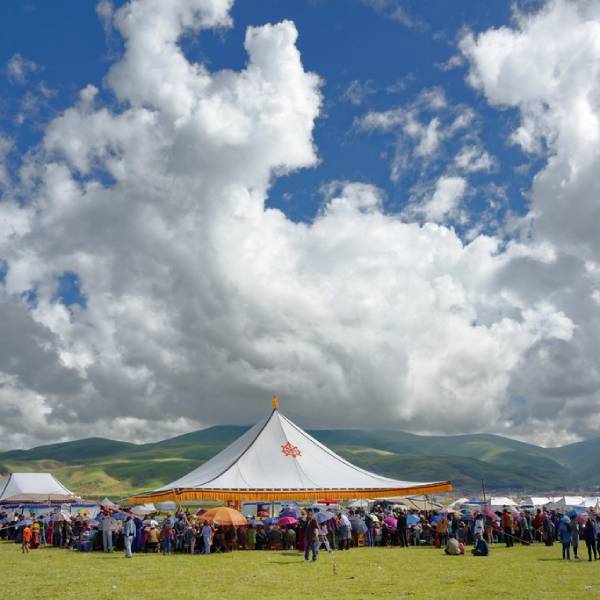
The Nagqu Horse Racing Festival is particularly associated with the broad grasslands of northern Tibet. During the celebration, large numbers of pastoral families travel toward the festival grounds and temporary tents appear across the landscape, creating the atmosphere of a seasonal settlement. Horses, riders, families, visitors, vendors, and performers share the same open space, making the gathering as much about social connection as competition. For 2026, the official Nagqu programme runs from 1 to 12 August, with the main opening ceremony on 10 August at the Gesar Racecourse. This year’s programme includes thirteen professional speed-racing events, two traditional equestrian performances, and additional folk sporting activities.
Gyantse has its own long-established horse-racing tradition, commonly associated with the Damar Festival. Its celebrations combine equestrian contests with archery, traditional sports, cultural performances, and local trading. The historic town and its surrounding valley provide a noticeably different setting from the immense northern grasslands of Nagqu. Travelers visiting Gyantse can also experience the wider cultural landscape around Palkhor Monastery, the Kumbum Stupa, traditional neighbourhoods, and nearby Himalayan routes. This mixture of sport, heritage, and local community life gives the Gyantse festival its own identity even though it shares Tibet’s broader enthusiasm for horses and archery.
Festival life continues well beyond the competition field. Music, group dancing, performances, markets, local foods, and social gatherings may accompany the sporting programme. Families often arrive wearing their finest clothing, while vendors display regional products, handicrafts, food, and everyday goods. Historically, such gatherings also created valuable opportunities for people from scattered communities to trade horses and other supplies, meet relatives, exchange news, and strengthen connections across distant pastoral areas.
For photographers and culturally curious travelers, the visual possibilities are exceptional. Galloping horses, decorated saddles, traditional clothing, mounted archers, tents spread across grasslands, musicians, and crowds framed by immense plateau scenery can create unforgettable images. Yet the people participating are preserving their own community traditions, not performing solely for visitors. Asking before taking close portraits, avoiding interference with competitors, and giving families appropriate personal space are important parts of respectful attendance.
Weather and altitude also deserve careful preparation. Many horse-racing venues are located at high elevations, where the sun can be particularly strong, and weather conditions may change rapidly. Travelers should bring layered clothing, sun protection, comfortable footwear, and rain protection where appropriate. Adequate acclimatisation is particularly important before spending long days outdoors or travelling rapidly from lower elevations.
Ultimately, Tibet’s Horse Racing Fair and Archery Festival celebrate much more than who crosses a finish line first or hits a target most accurately. It reflects generations of horsemanship, pastoral knowledge, physical skill, community gathering, and pride in regional traditions. From the expansive grasslands of Nagqu to the historic surroundings of Gyantse, these celebrations allow visitors to witness Tibetan culture in motion—through galloping horses, flying arrows, music, traditional dress, friendly competition, and communities gathering beneath the vast skies of the plateau.