Zamling Chisang
Zamling Chisang, also written as Dzamling Chisang, is a Tibetan spiritual observance centred on prayer, incense offerings, purification, and wishes for the well-being of all beings. The festival takes place on the 15th day of the fifth month of the Tibetan lunar calendar and is often translated as Universal Prayer Day or World Incense Offering Day. On this occasion, Tibetan families and religious communities gather at monasteries, sacred hills, mountain slopes, and local worship sites to burn aromatic plants and offer prayers for peace, health, harmony, and prosperity.
In 2026, Zamling Chisang was observed around 29 June according to the Central Tibetan Administration, which recorded a Universal Offering Day ceremony on that date. Some published Tibetan travel calendars place the corresponding lunar observance on 28 June, so travelers should confirm local scheduling for the exact destination they intend to visit. The Tibetan lunar date, the fifteenth day of the fifth month, remains the most dependable way of identifying the festival.
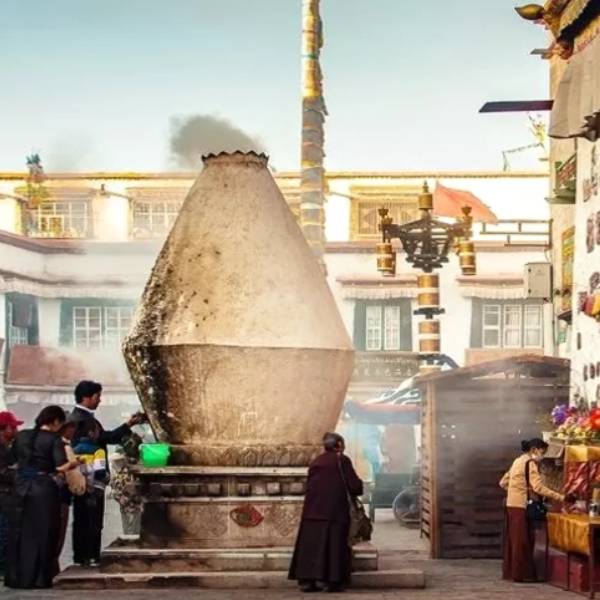
The most recognizable feature of Zamling Chisang is the sang offering. Juniper, cypress, aromatic herbs, barley flour, and other traditional materials may be placed into an incense burner or outdoor fire. As fragrant white smoke rises into the air, prayers and aspirations are offered along with it. The ritual is traditionally associated with cleansing negative influences and creating favorable conditions for individuals, families, communities, and the wider world.
Sang is not limited to this single festival. Incense offering has a much wider place within Tibetan religious and cultural life and may be performed at monasteries, homes, pilgrimage places, and mountain passes. Zamling Chisang gives that familiar practice a collective dimension. Instead of an individual household making a small offering, entire communities may participate, filling the surrounding landscape with incense smoke and prayer.
Many participants travel to high ground or sacred hills for the observance. The live festival page describes Tibetans climbing local mountains, where they burn incense and raise prayer flags. The elevated setting adds to the character of the day: smoke drifts above the landscape while multicolored prayer flags move in the wind, carrying printed mantras and auspicious symbols across the plateau.
Fresh prayer flags are another important part of the celebration. Old or damaged flags may be replaced and new ones raised at appropriate locations. During a 2026 Zamling Chisang observance reported by the Central Tibetan Administration, participants ceremonially raised 130 prayer flags while dedicating prayers to peace, compassion, harmony, and the welfare of sentient beings. The practice reflects the festival's emphasis on aspirations extending beyond personal benefit.
Religious traditions also connect Zamling Chisang with Guru Rinpoche, or Padmasambhava, and the early establishment of Buddhism in Tibet. One widely repeated account links incense-offering ceremonies with the period surrounding the founding of Samye Monastery, Tibet's first Buddhist monastery. Traditional narratives describe Guru Rinpoche performing rites to overcome obstructing forces and create favorable conditions for the monastery's construction. These accounts help explain why purification and incense offerings remain strongly associated with the festival today.
The day is nevertheless quieter than festivals built around horse racing, masked dances, or enormous public processions. Its power comes from repetition and atmosphere: juniper placed on the fire, smoke rising through cold mountain air, prayer flags being tied into position, families gathering together, and monks or lay practitioners reciting prayers. Visitors may encounter these practices at several locations rather than at one central festival ground.
Lhasa provides opportunities to see incense offerings as part of everyday Tibetan religious life. During Zamling Chisang, the practice becomes more prominent as worshippers gather around traditional sacred areas and elevated sites. Historical descriptions of the observance also mention incense offerings on hills around Lhasa, including locations near Chakpori and areas associated with Drepung.
For travelers, the festival provides a valuable contrast to Tibet's better-known large celebrations. There may be little need for grand staging because the landscape itself becomes part of the ritual. Mountains, open sky, smoke, prayer flags, monasteries, and groups of worshippers create an experience closely connected with Tibetan ideas about sacred geography and the relationship between spiritual practice and the natural environment.
Photography can be especially rewarding, but religious practice should come before getting the perfect image. Visitors should avoid standing between worshippers and incense burners, touching offerings, moving prayer flags, or blocking people who are performing circumambulation or prayer. Close portraits of monks, families, or individual devotees are better taken only after permission.
The high-altitude environment also deserves preparation. Anyone attending outdoor ceremonies around Lhasa or nearby mountain areas should carry sun protection, layered clothing, water, and suitable walking shoes. Weather can change quickly even during summer, particularly at exposed locations.
At its heart, Zamling Chisang in Tibet is a festival of collective intention. There is no need for elaborate spectacle. A handful of fragrant branches placed into a sacred fire can become an offering for an entire community, while prayer flags carry aspirations far beyond the people who raised them. Through incense, mountain gatherings, prayer, and acts of purification, the festival expresses a simple but powerful hope: that the coming days may bring greater peace, balance, health, and harmony to the wider world.
Important date note for your page: instead of hard-coding only one Gregorian date, I recommend writing “15th day of the fifth Tibetan lunar month; observed around 28–29 June in 2026.” The Central Tibetan Administration documented the 2026 observance on 29 June, while one Tibetan festival calendar converts the lunar date to 28 June.