Pelhe Duchen
Pelhe Duchen, often associated with the Palden Lhamo Festival, Pal Lhamo Festival, or Tibetan Fairy Festival, is a distinctive celebration observed in Lhasa and closely connected with Tibetan Buddhist faith, local legends, and women’s cultural traditions. The festival takes place on the 15th day of the tenth month of the Tibetan calendar and brings worshippers to important religious sites, particularly the Jokhang Temple and the historic Barkhor area. In 2026, the celebration falls on 24 November. Unlike Tibet’s large seasonal festivals, Pelhe Duchen has a more intimate character, combining religious devotion with community gatherings and traditions that have become especially meaningful for Tibetan women.
The spiritual background of the festival is connected with Palden Lhamo, one of the important female protector deities in Tibetan Buddhism. She is traditionally associated with the protection of Buddhist teachings and holds a particularly strong connection with Lhasa. Religious images connected with the deity can be found in Tibetan monasteries and temples, and special prayers are offered during the festival period. The existing Pelhe Duchen tradition in Lhasa includes devotional rituals, offerings, illuminated religious spaces, and gatherings of worshippers who seek protection, peace, happiness, and favorable circumstances.
Local stories surrounding the festival add another layer of cultural meaning. Different versions of the legend have been passed down, but one widely told story concerns a young goddess or fairy associated with Palden Lhamo who fell in love with a protective deity connected with Jokhang Temple. Their relationship was opposed, and the lovers were separated, with tradition allowing them to meet only once each year on the 15th day of the tenth Tibetan month. The annual reunion became associated with what is now widely called the Fairy Festival. Because oral traditions can vary between communities and sources, the precise details of the story are told in several forms, but the themes of love, separation, devotion, and reunion remain central.
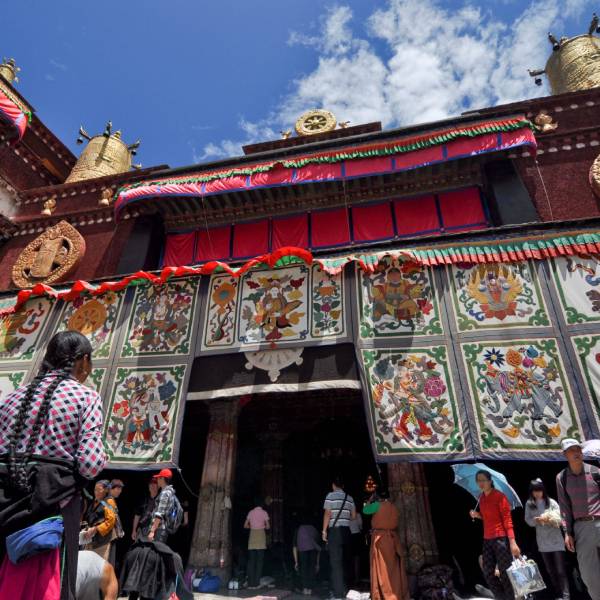
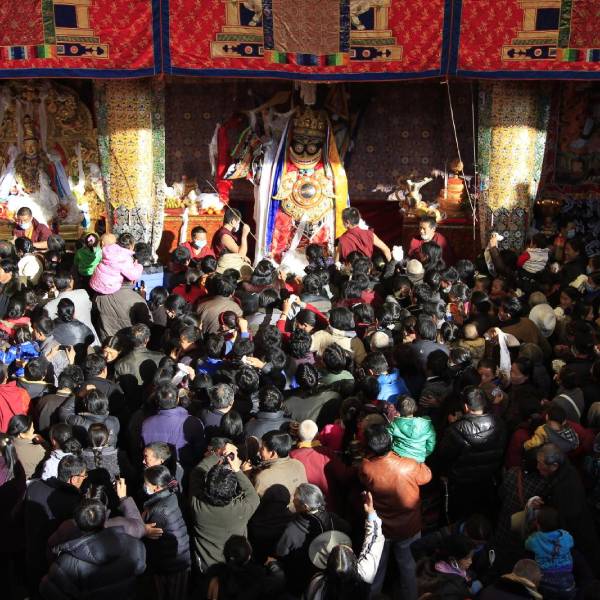
The Jokhang Temple becomes one of the most important places to experience the occasion. From early morning, worshippers arrive carrying offerings such as white khata scarves, flowers, barley, incense, and barley wine. Prayers are offered before sacred images, while religious activity continues around the temple and nearby Barkhor Street. Butter lamps and candles may illuminate devotional spaces, adding warmth to the atmosphere as pilgrims perform their prayers and circumambulations. The combination of ritual, light, incense, traditional clothing, and historic architecture makes the festival visually striking while preserving its deeply religious character.
Women play an especially visible role in the modern celebration. Many dress in elegant traditional clothing, jewelry, and festive accessories before visiting Jokhang Temple to pray for health, happiness, prosperity, and good fortune. Groups of friends and family members may attend together, turning the day into both a religious observance and a celebration of women. This connection has led the event to become widely recognized as a form of Tibetan Women’s Festival or Women’s Day in contemporary Lhasa. Traditional dances, social gatherings, photographs, and shared celebrations can add a joyful atmosphere to the religious activities surrounding the temple.
One interesting custom involves women and children requesting small gifts or money from men during the celebration. The exchange is traditionally treated in a playful and generous spirit, with giving associated with respect and good fortune. Although customs naturally change over time, this practice remains one of the features that distinguishes the Fairy Festival from Tibet’s more solemn Buddhist commemorations. It gives the day a lively community character while maintaining its connection with religious devotion and blessing.
For travelers in Lhasa, Pelhe Duchen offers an opportunity to observe Tibetan culture in a setting where religion and everyday community life come together naturally. The Barkhor area can become particularly active as pilgrims complete the traditional clockwise kora around Jokhang Temple, turn prayer wheels, offer incense, and recite prayers. Visitors can witness traditional clothing, devotional offerings, social interaction, and religious practices occurring within one of Tibet’s most historically significant neighborhoods.
Travelers should remember that Pelhe Duchen remains a meaningful religious and cultural occasion rather than a staged tourist attraction. Photography should be approached respectfully, especially around people praying or making offerings. Permission should be requested before taking close portraits, and visitors should avoid blocking pilgrimage paths, temple entrances, or areas where worshippers are performing prostrations. Following local guidance and observing quietly can provide a much deeper understanding of the occasion than focusing only on photographs.
Late November in Lhasa can also be cold, particularly during the morning and evening. Warm layered clothing, comfortable walking shoes, sun protection, and adequate preparation for the city’s high altitude are recommended. Lhasa sits at approximately 3,650 meters, so travelers arriving from lower elevations should allow time to acclimatize before spending long periods walking around Barkhor or visiting additional monasteries.
Pelhe Duchen ultimately brings together Buddhist devotion, female cultural identity, local legend, generosity, and community celebration. From prayers and offerings at Jokhang Temple to beautifully dressed women gathering around Barkhor, the festival presents a side of Lhasa that is both spiritual and deeply connected with everyday Tibetan life. For visitors interested in living traditions rather than monuments alone, experiencing Pelhe Duchen provides a memorable opportunity to understand how faith, folklore, social customs, and community continue to shape Tibet’s cultural identity.