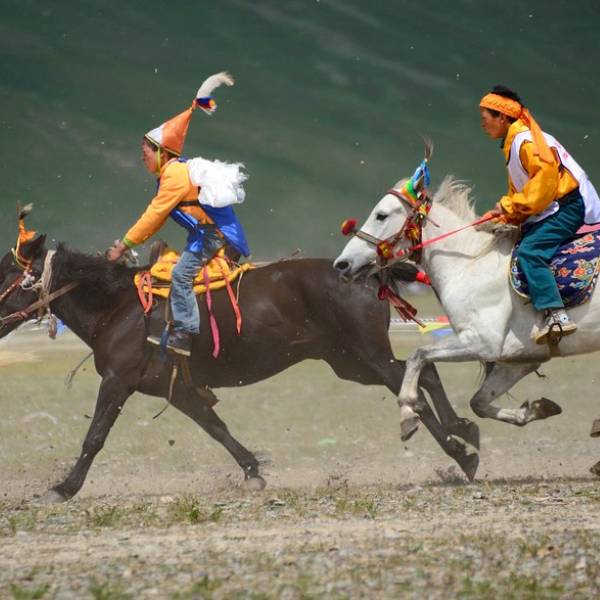
Saga Dawa Festival
Saga Dawa Festival is one of the most spiritually significant periods in the Tibetan Buddhist calendar. Rather than being limited to a single day, the observance extends throughout the fourth month of the Tibetan lunar calendar, when monasteries, pilgrimage routes, temples, and sacred landscapes become especially active with prayer and devotional practice. The most important day is Saga Dawa Duchen, observed on the full moon, or fifteenth day, of the month. In 2026, Saga Dawa Duchen fell on 31 May. The occasion commemorates three major events traditionally associated with Shakyamuni Buddha: his birth, enlightenment, and passing into parinirvana.
For Tibetan Buddhists, Saga Dawa is a period for placing greater attention on compassion, ethical conduct, generosity, meditation, and awareness. Many devotees intentionally simplify their daily routines and spend additional time performing religious practices. Monasteries receive worshippers carrying butter lamps, incense, prayer scarves, and other offerings, while individuals may recite mantras, read Buddhist teachings, meditate, or support charitable activities. The emphasis is less on entertainment and more on using the sacred period for reflection and beneficial actions.
One of the most visible traditions during Saga Dawa is kora, the clockwise circumambulation of a sacred place. In Lhasa, pilgrims can be seen walking around Jokhang Temple and along traditional pilgrimage circuits while spinning prayer wheels, counting prayer beads, reciting mantras, or performing prostrations. The historic Barkhor area becomes particularly atmospheric as worshippers of different ages move together through the old city. The existing Saga Dawa page also notes that circumambulation and prayer form a central part of the observance in Lhasa.
Butter-lamp offerings add another distinctive element to the sacred month. Lamps are lit at temples, monasteries, shrines, and household altars as acts of devotion. In Buddhist symbolism, light is commonly associated with wisdom and the removal of ignorance, giving the simple act of lighting a lamp a deeper spiritual meaning. Incense offerings, scripture recitation, prayer-wheel turning, and visits to monasteries accompany these practices, creating a calm but deeply active religious atmosphere throughout the month.
Acts of kindness are equally important during Saga Dawa. Devotees may donate food or money, support monasteries, help people in need, or deliberately avoid causing harm to animals. Compassion toward living beings is strongly emphasized during the period, reflecting the broader Buddhist principle that spiritual practice should influence everyday behavior. The original festival page specifically highlights charitable giving and the avoidance of killing animals as important expressions of devotion during Saga Dawa.
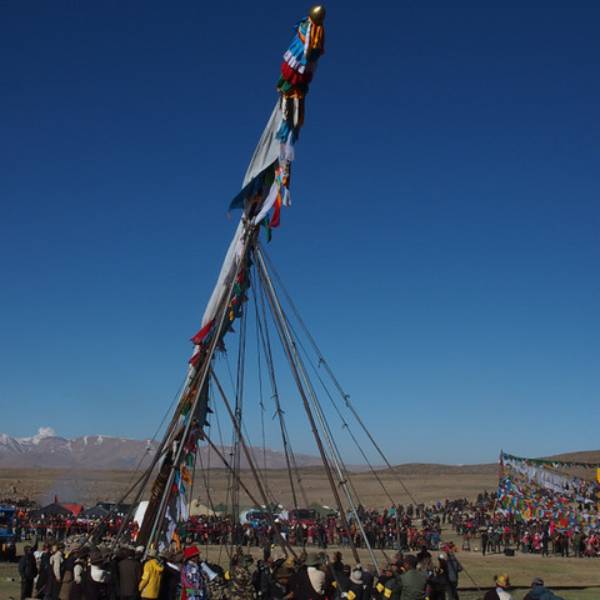
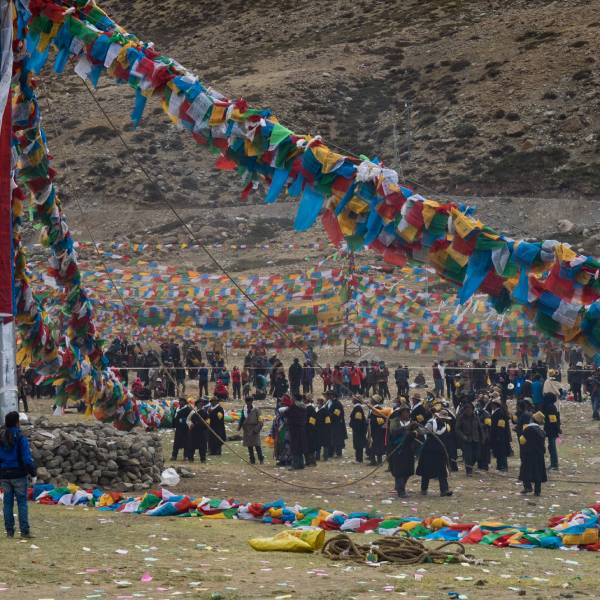
Beyond Lhasa, Mount Kailash becomes one of the most powerful locations associated with Saga Dawa. Pilgrims travel to the remote western Tibetan Plateau to complete the sacred kora around the mountain and participate in ceremonies near Tarboche. One of the best-known events is the renewal and raising of the large prayer-flag pole, when old flags are replaced and new ones are attached amid prayers, chanting, incense, and large gatherings of worshippers. In 2026, thousands of pilgrims gathered around the Tarboche site for this ceremony against the dramatic backdrop of Mount Kailash.
The Mount Kailash pilgrimage adds both physical and spiritual intensity to the festival. The traditional kora circles the sacred mountain through high-altitude terrain, and international travelers commonly complete the route over several days. Tibetan Buddhist pilgrims may approach the circuit differently, with some walking at a faster pace and others performing repeated prostrations along sections of the route. Because of the elevation and demanding landscape, visitors considering the Kailash journey need adequate acclimatization, appropriate clothing, and realistic preparation for the physical challenge.
For travelers staying in Lhasa, Saga Dawa can still be experienced without undertaking the remote Kailash pilgrimage. Jokhang Temple, Barkhor Street, monasteries, and traditional pilgrimage routes provide opportunities to witness increased devotional activity. Early mornings can be especially memorable, when pilgrims begin their circuits and the historic streets are filled with prayer wheels, incense, and the quiet rhythm of religious practice. These moments provide a different perspective on Lhasa from ordinary sightseeing because sacred landmarks are experienced as active places of worship rather than monuments alone.
Visitors should approach Saga Dawa with particular respect. Modest clothing is appropriate inside religious areas, pilgrimage paths should not be blocked, and worshippers performing prostrations should be given plenty of space. Photography rules differ between temples and monasteries, and close photographs of monks, pilgrims, or private rituals should only be taken with permission. When following a kora route, travelers should observe local guidance and move in the appropriate direction for the tradition being followed.
High altitude is another important consideration. Lhasa itself stands at roughly 3,650 metres, while Mount Kailash routes reach considerably greater elevations. Travelers arriving from lower altitudes should allow sufficient time to adjust before undertaking demanding walks or long journeys across the plateau. Layered clothing, strong sun protection, hydration, and a slower pace can make the experience more comfortable.
At its heart, Saga Dawa in Tibet is a month devoted to remembering the Buddha through personal action rather than spectacle. Pilgrims walking sacred circuits, families making offerings, monks reciting scriptures, butter lamps glowing inside temples, charitable acts, and prayer flags moving in the Himalayan wind all express the same underlying themes of wisdom, compassion, and spiritual responsibility. For travelers interested in Tibetan Buddhism and living cultural traditions, Saga Dawa offers an unusually meaningful opportunity to witness faith woven directly into the daily life and sacred landscapes of the Tibetan Plateau.